Products
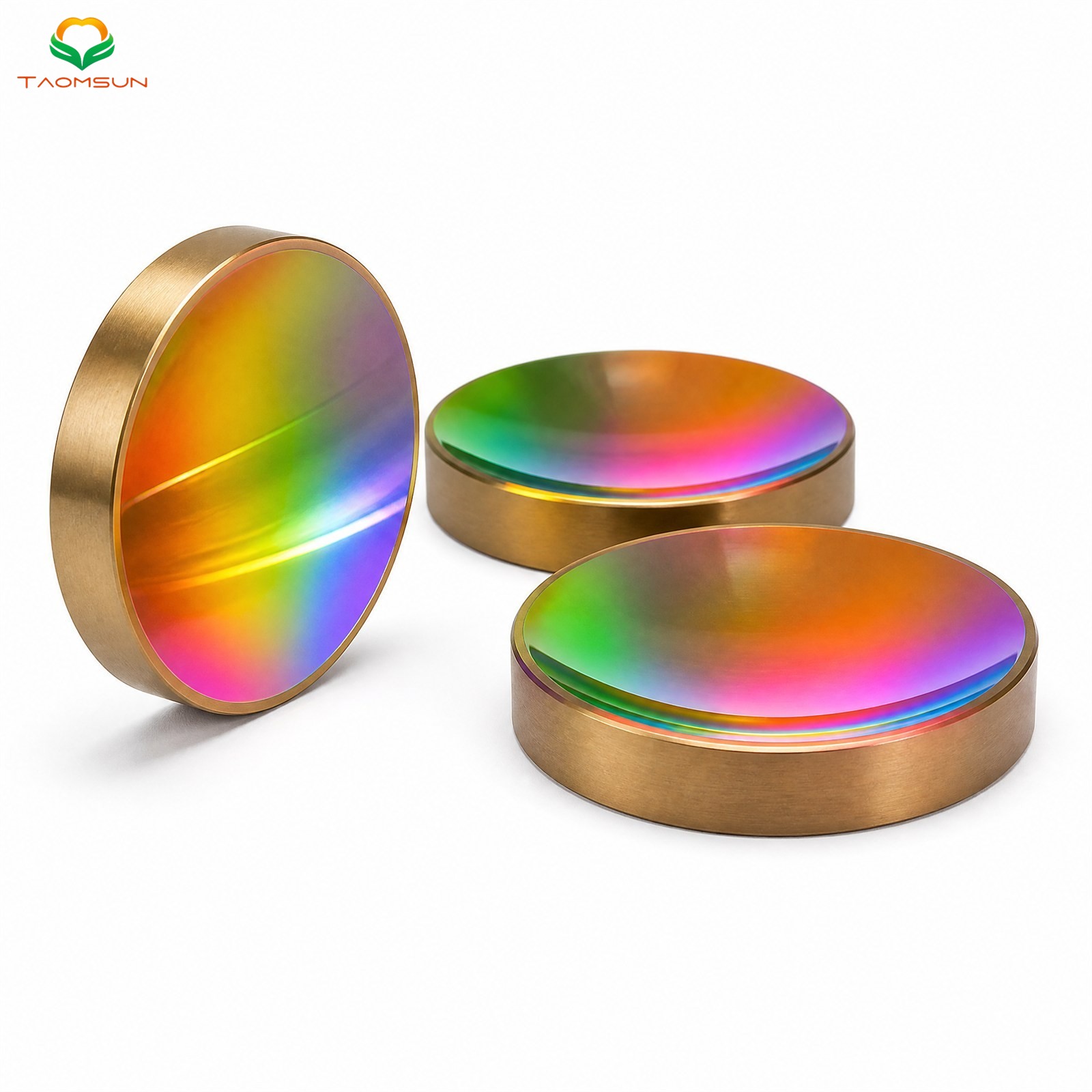


Brand: TAOMSUN | Origin: China | Korea Sales / Technical Support: METICULAB (Korea) | Holographic recording · Variable-pitch curved grooves · Aberration correction

The TAOMSUN concave holographic grating is a key dispersive element for spectrometers, manufactured using advanced holographic recording technology with a variable-pitch curved-groove structure. It combines both dispersion and imaging functions, enabling a spectrometer to achieve spectral separation and focusing with just a single optical surface – greatly simplifying the system design. Compared with conventional ruled gratings, its unique aberration-correction capability significantly improves spectral resolution and signal-to-noise ratio, making it the ideal core component for spectral detection in environmental monitoring, materials analysis, biomedicine and other fields.
🔍 Key features: variable-pitch curved-groove design – built-in aberration correction improves spectral purity; holographic recording process – ultra-low stray light, high SNR; concave substrate – combines imaging capability and simplifies the optical system.
Product overview
Grating detail
Groove structure
Coating options
Spectrometer integration
| Manufacturing process | Holographic recording (variable-pitch curved grooves) |
| Substrate material | UV-grade fused silica / optical glass / custom materials |
| Concave radius of curvature | 50 – 1000 mm (customizable) |
| Groove density | 100 – 3600 lines/mm |
| Blaze wavelength | 200 nm – 1200 nm (UV, visible or NIR optional) |
| Spectral range | 190 nm – 1800 nm (depending on coating and design) |
| Aberration correction | Variable-pitch self-correction (spherical aberration, coma, astigmatism) |
| Resolution | λ/Δλ > 10000 (typical) |
| Stray light | < 5×10⁻⁵ (at He-Ne laser line) |
| Coating | UV-enhanced aluminum, gold or dielectric (optional) |
| Clear aperture | > 90% |
| Diffraction efficiency | Peak > 60% (depending on coating and blaze conditions) |
| Origin | China |
| Korea Sales / Technical Support | METICULAB (Korea) |
| Model | Size (mm) | Grooves (lines/mm) | Linear dispersion (nm/mm) | Band (nm) | Entrance arm (mm) | Exit arm (mm) | Angle (°) |
|---|---|---|---|---|---|---|---|
| A1 | 32×32×9.5 | 1200 | 8 | 190-850 | 100 | 94 | 61.6 |
| A2 | 32×32×9.5 | 1200 | 8 | 250-900 | 100 | 94 | 61.6 |
| A3 | 40×45×10 | 1200 | 4 | 190-850 | 200 | 195 | 61.6 |
* For other specifications (e.g. different groove density, radius of curvature or spectral band), please contact us for customization.
| Aberration correction | Variable-pitch curved grooves, significantly better than equal-pitch ruled gratings, purer spectrum |
| Signal-to-noise ratio (SNR) | Holographic recording process, extremely low stray light, high SNR |
| Imaging capability | Concave substrate provides built-in focusing, simplifies the optical path and reduces components |
| Service life | No mechanical scratching, stable diffractive structure, excellent repeatability |
| Cost effectiveness | Replication process enables volume production, better value than ultra-precision ruled gratings |

Full-parameter customization is supported to meet the design requirements of different spectrometers:
Q: What is the main difference between a concave holographic grating and a plane holographic grating?
A: A concave holographic grating is made on a concave substrate and has built-in focusing capability – it can image without an extra mirror, making the optical path more compact. A plane grating requires a focusing mirror, so the system is larger.
Q: What advantages does a variable-pitch grating offer over an equal-pitch grating?
A: The variable-pitch design actively corrects aberrations (especially spherical aberration and coma), significantly improving spectral resolution and image quality – something a conventional equal-pitch grating cannot achieve.
Q: How do I choose the right groove density for my spectrometer?
A: Groove density determines spectral resolution and bandwidth. High-density grooves (>1800 lines/mm) suit high-resolution UV-VIS applications; low-density grooves (<600 lines/mm) suit wide-bandwidth applications.
Q: Are holographic gratings easy to damage?
A: No. The grooves of a holographic grating are photochemically recorded on a photosensitive layer and then coated, forming a robust structure. As long as physical scratching and strong acid/alkali environments are avoided, its service life far exceeds that of ruled gratings, with long-term stable performance.
Q: Can you provide complete OEM spectrometer grating modules?
A: Yes. TAOMSUN provides complete solutions from grating design to coating, and can work with METICULAB for joint optimization of the optical system.
TAOMSUN is a professional supplier deeply engaged in precision optical components and core spectroscopy parts, focused on the R&D and supply of holographic gratings, lenses, windows and other optical components. The company is certified under the ISO 9001 quality management system, and its products are widely used in high-end fields such as spectral analysis, environmental monitoring and biomedicine. With decades of precision optical manufacturing experience, a mature supply chain and strict quality control, every product delivers excellent quality and stable delivery. 🌏 Overseas sales and technical support is provided by METICULAB™ (Korea).
TAOMSUN Spectroscopy Core Components | 📧 Sales Inquiry taomsun@vip.163.com +86-13862625813 | 🌏 Overseas Sales / Technical Support METICULAB™ (Korea) choikyuc@gmail.com +82-10-3988-4813 💬 WhatsApp / KakaoTalk |
TAOMSUN products are manufactured under the ISO 9001 quality management system. Specifications are typical values and may vary with custom configurations. For OEM/ODM customization, non-standard sizes or special coatings, please contact our sales team. International customers can contact METICULAB (Korea) for Korean/English technical consultation.


METICULAB is a brand owned by METICULAB (Korea). Manufactured & supplied by Suzhou Taomsun Instrument Co., Ltd.(TAOMSUN), China.
Copyright © 2026 SUZHOU TAOMSUN SCIENTIFIC INSTRUMENTS CO.,LTD All Rights Reserved | Overseas local business handled by METICULABPrivacy Policy Terms Of Service Site Map

We use cookies to enhance your browsing experience, deliver personalized content, and analyze website performance. Strictly necessary cookies are essential for the proper functioning of the website and cannot be disabled. You may choose to enable or disable analytical cookies, but disabling certain cookies may affect some features or your overall browsing experience. You can manage your cookie preferences below. For detailed information, please refer to our Privacy and Protection Policy.
If you have any comments, suggestions, or questions regarding our use of cookies or this Privacy Policy, or if you wish to make a request or inquiry concerning your personal information, please contact us at taomsun@vip.163.com
 English
 日本語
 한국어
 Deutsch
 España